How to Start a Keto Diet: Complete Beginner's Guide
A complete beginner's guide to starting a ketogenic diet, including foods to eat, foods to avoid, meal planning tips, and common mistakes to avoid.
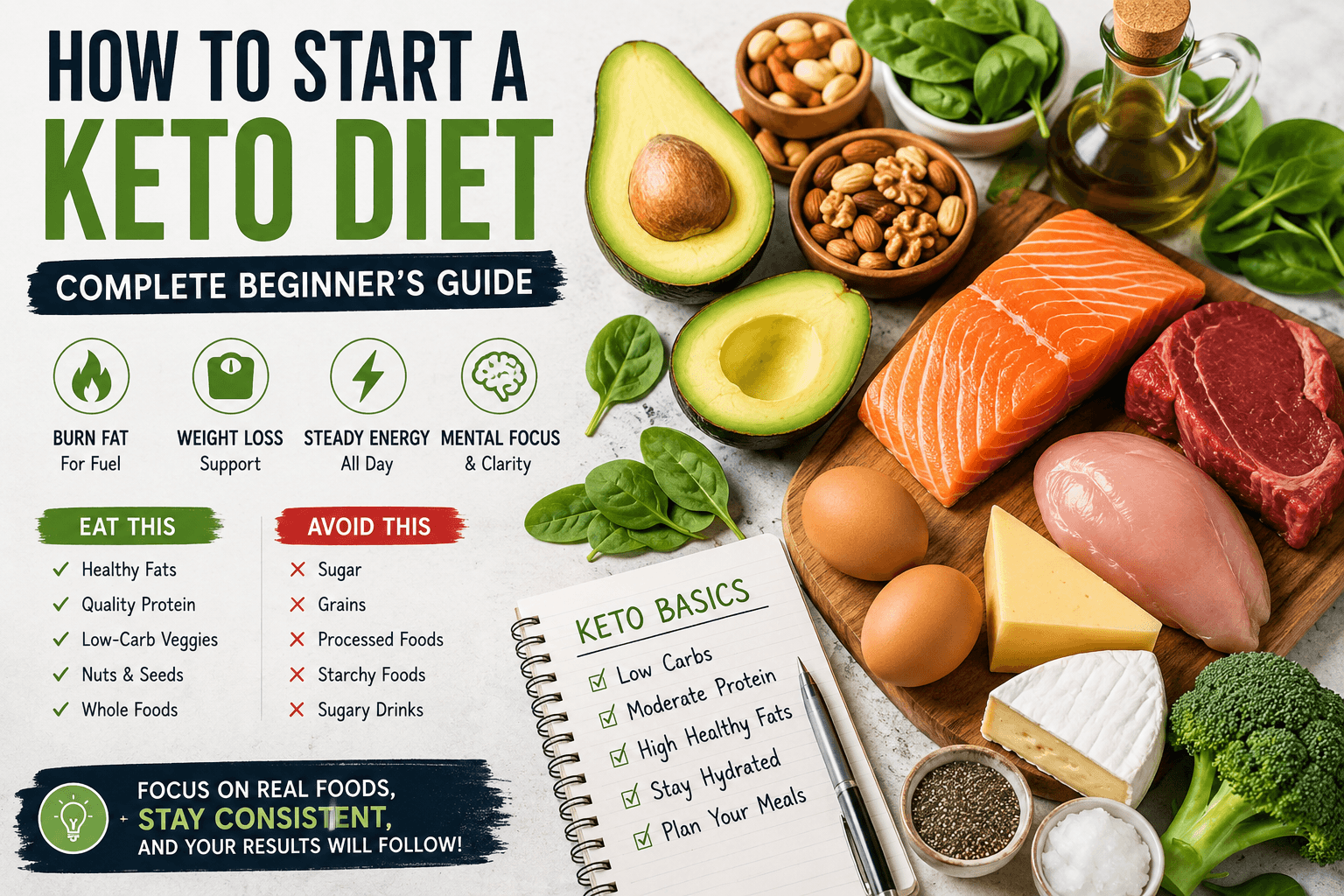
Introduction
The ketogenic diet, commonly known as keto, has become one of the most popular weight-loss and healthy lifestyle approaches in recent years. Millions of people have adopted keto to lose weight, improve energy levels, reduce cravings, and simplify their eating habits.
If you're completely new to keto, the amount of information online can feel overwhelming. The good news is that getting started is actually much simpler than most people think. By understanding the basics and following a structured plan, you can make the transition smoothly and avoid common beginner mistakes.
This guide will explain everything you need to know about starting a keto diet, including what to eat, what to avoid, meal planning strategies, and practical tips for long-term success.
What Is the Keto Diet?
The ketogenic diet is a low-carbohydrate, high-fat eating plan that encourages the body to use fat as its primary source of energy instead of carbohydrates.
Under normal circumstances, your body relies on glucose from carbohydrates to fuel your daily activities. When carbohydrate intake is drastically reduced, your body begins producing ketones from stored fat and dietary fat. This metabolic state is known as ketosis.
Once your body enters ketosis, it becomes highly efficient at burning fat for energy. This is one of the main reasons many people choose keto for weight loss and body composition improvement.
Benefits of the Keto Diet
While weight loss is often the primary motivation for starting keto, many people experience additional benefits.
- Reduced hunger and cravings
- Improved energy stability
- Better appetite control
- Potential improvement in blood sugar management
- Increased mental focus
- Simplified meal planning
- More consistent energy throughout the day
Results vary from person to person, but many keto followers report feeling fuller for longer and experiencing fewer energy crashes compared to high-carbohydrate diets.
Foods You Should Eat on Keto
The foundation of a successful keto diet is choosing foods that are naturally low in carbohydrates and rich in healthy fats.
Healthy Proteins
- Beef
- Chicken
- Turkey
- Pork
- Lamb
- Eggs
- Seafood
Healthy Fats
- Avocados
- Olive oil
- Coconut oil
- Butter
- Heavy cream
- Cheese
- MCT oil
Low-Carb Vegetables
- Spinach
- Kale
- Broccoli
- Cauliflower
- Zucchini
- Cucumber
- Asparagus
- Bell peppers
Nuts and Seeds
- Almonds
- Walnuts
- Pecans
- Chia seeds
- Flaxseeds
Foods to Avoid on Keto
Many foods commonly found in modern diets are too high in carbohydrates for ketosis.
- Bread
- Pasta
- Rice
- Potatoes
- Cereal
- Cakes and pastries
- Candy
- Soda
- Fruit juices
- Sugary coffee drinks
Even healthy foods such as bananas, grapes, and mangoes can contain too many carbohydrates for a ketogenic diet.
How Many Carbs Can You Eat?
Most beginners aim to consume between 20 and 50 grams of net carbohydrates per day.
Net carbs are calculated by subtracting fiber from total carbohydrates.
Example:
- Total carbohydrates: 12g
- Fiber: 5g
- Net carbohydrates: 7g
Keeping net carbs low helps your body enter and maintain ketosis.
How to Start Keto in 7 Steps
Step 1: Clean Out Your Kitchen
Remove tempting high-carb foods such as chips, cookies, candy, sugary drinks, and processed snacks.
Step 2: Create a Keto Grocery List
Stock up on keto-friendly foods before starting. Preparation is one of the biggest predictors of success.
Step 3: Plan Your Meals
Having a weekly meal plan reduces decision fatigue and prevents impulsive eating.
Step 4: Increase Healthy Fats
Healthy fats help keep you full and provide energy while your body adapts.
Step 5: Stay Hydrated
Keto can cause rapid water loss during the first week, making hydration essential.
Step 6: Monitor Your Progress
Track your food intake and observe how your body responds.
Step 7: Stay Consistent
Results come from consistency, not perfection. Focus on building sustainable habits.
Understanding the Keto Flu
Some people experience temporary symptoms during the first few days of keto.
- Headaches
- Fatigue
- Irritability
- Dizziness
- Muscle cramps
- Brain fog
These symptoms usually disappear within a few days and can often be minimized by increasing electrolytes and water intake.
Sample Keto Meal Plan
Breakfast
Scrambled eggs cooked in butter with sliced avocado.
Lunch
Grilled chicken salad with olive oil dressing.
Dinner
Salmon with roasted broccoli and garlic butter.
Snack
Cheese cubes and almonds.
Common Beginner Mistakes
- Eating too many carbohydrates
- Not consuming enough healthy fats
- Ignoring hidden sugars
- Not drinking enough water
- Expecting instant results
- Not planning meals ahead of time
Understanding these mistakes can help you stay motivated and avoid unnecessary frustration.
Frequently Asked Questions
How long does it take to enter ketosis?
Most people enter ketosis within 2 to 7 days depending on carbohydrate intake and activity level.
Can I exercise while on keto?
Yes. Many people continue exercising while following a ketogenic diet. Energy levels often improve once the body adapts.
Is keto safe long term?
Many individuals follow keto successfully for extended periods, but it's important to focus on nutrient-dense foods and consult a healthcare professional when needed.
Final Thoughts
Starting a keto diet doesn't have to be complicated. By focusing on whole foods, limiting carbohydrates, increasing healthy fats, and staying consistent, you can successfully transition into a ketogenic lifestyle.
Remember that progress takes time. Focus on building sustainable habits, preparing your meals, and learning which foods work best for your body. With patience and consistency, keto can become a powerful tool for weight loss, improved energy, and better overall health.